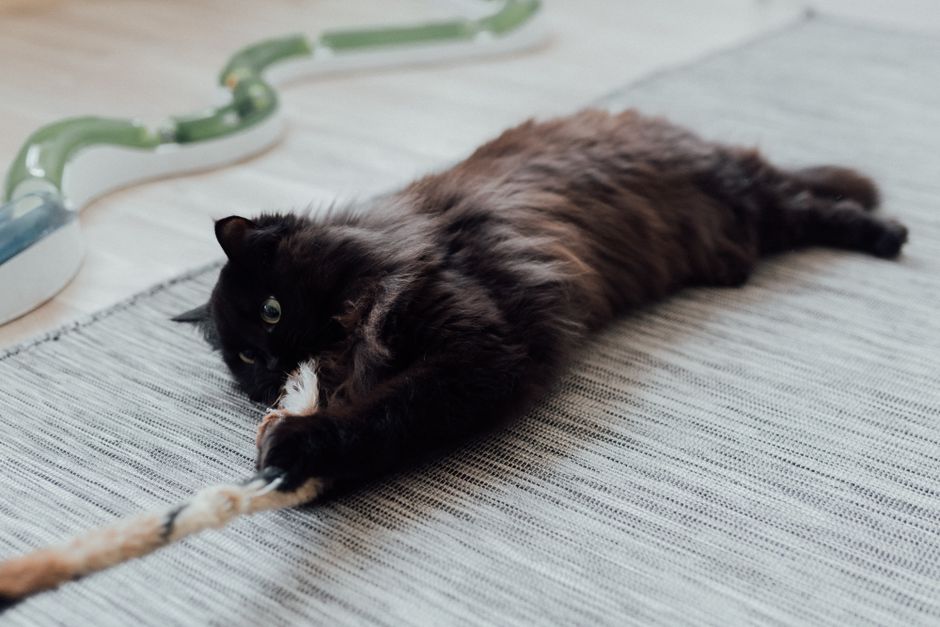
Let me be honest: most cat toys end up in corners gathering dust while your feline ignores them completely. I've been there—spending money on elaborate toy towers only to watch my cat prefer a random twist-tie. The difference between a forgotten toy and one your cat returns to daily comes down to understanding what actually triggers their hunting instincts and keeps their minds engaged.
After years of testing different options with rescue cats at various activity levels, I've learned that interactive toys aren't just about keeping cats entertained. They're essential for their physical health, mental well-being, and preventing behavioral problems like aggression and destructiveness.
Why Interactive Play Matters for Cats
Before we dive into specific toys, let's talk about why this matters. The domestic cat is still fundamentally a predator, even if they live entirely indoors. Their brains and bodies are wired for hunting—stalking, pouncing, and catching prey multiple times per day.
The American Association of Feline Practitioners (AAFP) recommends that cats receive at least 30 minutes of dedicated interactive play daily. Many cats need significantly more. Without adequate stimulation, indoor cats can develop obesity (affecting nearly 60% of indoor cats according to veterinary studies), depression, and behavioral issues including inappropriate elimination and aggression.
Interactive toys work because they satisfy this predatory drive in a safe, controlled way. The key is variety and engagement—your participation matters tremendously.
Wand Toys: The Gold Standard
If you're buying just one type of toy, make it a wand toy. These simple tools consist of a rod, string, and an attachment (feather, bell, toy mouse) that you control, and they're remarkably effective.
The genius of wand toys is that they let you control the prey's movement in unpredictable ways. You can mimic the erratic movements of actual prey animals—a bird diving, a mouse darting suddenly. This triggers hunting behavior that stationary toys simply cannot replicate.
Quality matters here. Look for wands with:
- Durable string that resists fraying (cats can ingest loose fibers)
- Lightweight attachments that move realistically
- Comfortable grip handles for extended play
I recommend keeping several wand toys in rotation to maintain novelty. A feather toy, a small mouse, and a crinkly ball attachment each trigger slightly different behaviors. Some cats become obsessed with the erratic movements of feather wands, while others prefer the weight and movement of small toy mice.
You Might Also Enjoy
- Cat Wand Toys: How to Use Them for Maximum Exercise and Bonding
- Why Cats Need Toys: The Connection Between Play and Health
- The Best Chew Toys for Aggressive Chewers
- The Best Puzzle Toys for Dogs Who Get Bored Easily
Electronic and Motion-Activated Toys
When you can't actively play, electronic toys can help. The challenge is finding ones that actually hold a cat's interest beyond the first few minutes.
Laser pointers generate intense interest initially, but I recommend using them judiciously. A 2015 study in Applied Animal Behaviour Science found that cats became frustrated when they couldn't physically catch the light, potentially leading to obsessive behavior. If you use a laser, always end the play session by letting them "catch" a real treat or toy.
Better electronic options include:
- Robotic mice: Battery-powered toys that scurry across the floor in unpredictable patterns. Brands with realistic movements hold attention longer.
- Automatic ball launchers: For cats that enjoy chasing rolling objects, these can provide independent play sessions.
- Motorized feather toys: These combine motion with the visual interest of feathers.
These toys work best for cats with moderate to high prey drive. Elderly or less active cats might find them overstimulating or frustrating.
Puzzle Feeders and Treat-Dispensing Toys
Interactive feeding isn't just about mental stimulation—it can actually aid weight management. Instead of eating meals from a bowl, cats work for food, burning calories while engaging their natural foraging instincts.
Puzzle feeders range from simple (a ball with holes you fill with kibble) to complex (multi-step puzzles requiring different paw movements). The most effective options:
- Graduated difficulty: Start with easier puzzles and increase complexity as your cat learns
- Multiple chambers: So your cat can't solve it and abandon it after 30 seconds
- Treat variety: Use both regular kibble and special treats to maintain interest
The added benefit is weight management. Research from veterinary nutritionists shows that cats fed exclusively from puzzle feeders consume at a more natural pace and often naturally reduce overall calorie intake while feeling more satiated.
Tunnel and Cave Toys
Cats need hiding spaces—it's not optional for their psychological well-being. Interactive tunnels combine hiding with active play elements.
Crinkle tunnels are particularly popular because they provide:
- Safe, enclosed spaces for nervous cats
- Crinkle sounds that intrigue curious felines
- A confined space perfect for running and pouncing
Mesh tunnels with dangling attachments add another layer of engagement. Your cat can chase the dangling objects while moving through the tunnel, combining multiple types of play simultaneously.
DIY Interactive Options
You don't need expensive toys for excellent results. Some of the best interactive play comes from items you already have:
- Paper bags: Remove handles (choking hazard) and crumple. The paper texture and crinkling sound provide hours of entertainment and are completely safe.
- Cardboard boxes: Cut holes for visibility and pouncing. Add dangling objects inside.
- Feather toys: Make these yourself with feathers, ribbon, and a stick. Cost: less than a dollar.
- Ping-pong balls: Lightweight, bouncy, and inexpensive. Safe for unsupervised play.
Safety Considerations
When choosing interactive toys, keep these guidelines in mind:
Small attachments should be securely fastened—toys shouldn't have removable bells or beads that could become choking hazards. Strings and ribbons must be monitored during play to prevent accidental ingestion.
Never leave wand toys unattended. A cat can wrap string around their intestines, creating a linear foreign body requiring emergency surgery. Always put wand toys away after play.
Electronic toys should meet quality standards. Look for toys certified by reputable testing bodies that ensure non-toxic materials and proper mechanical function.
Creating a Rotation System
The secret many cat owners don't realize is that novelty drives engagement. A toy that bored your cat three months ago often becomes fascinating again after a break. I maintain a rotation where only 4-5 toys are accessible at any time, with others stored away and rotated monthly.
This accomplishes two things: your cat's interest level stays high, and you'll notice behavioral changes more easily since toy fatigue won't mask health or mood issues.
Understanding Your Individual Cat
Not every cat enjoys the same toys. Some cats are ball-obsessed and ignore feather wands entirely. Others prefer solo interactive play and won't engage with wand toys but love puzzle feeders and electronic toys.
The best approach is to observe your cat's natural behaviors:
- Does she bat at leaves when looking out windows? She might love feather toys.
- Does he stare at the corner where crickets hide? He needs small, slow-moving prey toys.
- Does she ignore toys but chase her tail? She might need lower-intensity toys and more wand play.
For detailed guidance on interactive toys and behavioral enrichment, the American Association of Feline Practitioners provides comprehensive resources on species-appropriate play for cats.
The Payoff
When you find the right toys and maintain a consistent interactive play routine, the changes are dramatic. Cats become calmer, sleep better, and show fewer behavioral problems. The bond between you and your cat deepens when you're actively engaged in play together rather than just coexisting in the same space.
Those toys gathering dust in the corner? Donate them. Invest instead in 2-3 quality wand toys, a puzzle feeder, and commit to 20 minutes of daily interactive play. Your cat's health—physical and mental—will thank you.
Start with one new toy this week. Watch what captures your individual cat's attention, and build from there. Every cat is unique, and discovering what makes your particular feline pounce, climb, and hunt again is part of the joy of cat ownership.
Sarah Mitchell is a pet care specialist based in Portland, Oregon, with over a decade of experience in cat behavior and enrichment. She volunteers at local rescue organizations and regularly consults with owners on behavioral issues.