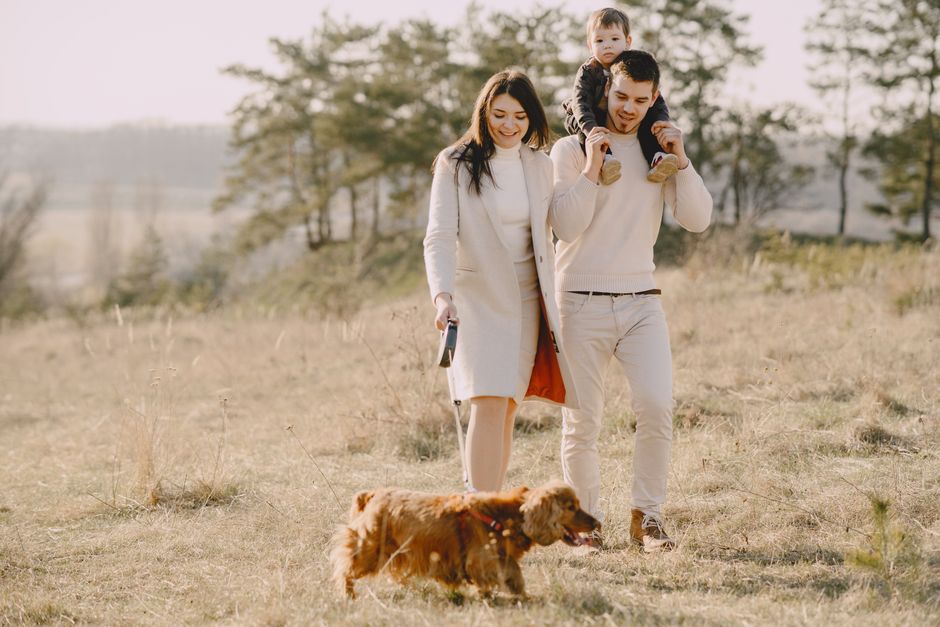
Your daughter begs for a pet. Your son wants a dog like his friend has. As parents, we know that pets mean responsibility, mess, and cost. But what we often underestimate is what pets teach children about empathy, compassion, and accountability—lessons no curriculum can replicate.
Growing up with pets creates lasting impacts on children's emotional development, social skills, and character formation. The evidence is compelling, and it goes far deeper than "teaching responsibility." Understanding these benefits helps frame pet ownership as a developmental opportunity, not just a household obligation.
The Research on Pet Ownership and Child Development
Multiple studies document the positive effects of pet ownership on childhood development:
A study published in Applied Animal Behaviour Science found that children who grew up with pets showed significantly higher empathy scores and lower aggression levels compared to children without pets.
Research from the Journal of School Nursing demonstrated that children with pets showed improved emotional regulation and reduced anxiety symptoms.
Studies by child psychologists indicate that interactions with pets increase oxytocin (the "bonding hormone") in children, similar to effects seen during positive human interaction.
The evidence is consistent: childhood pet ownership is linked to better emotional development, stronger social skills, and improved character development.
You Might Also Enjoy
- Adopting a Rescue Pet: What First-Time Owners Should Expect
- The Best Dog Breeds for Families with Young Children
- Companion Pets for Seniors: Finding the Right Match for Golden Years
- The Emotional Benefits of Pets for People Living Alone
Empathy Through Direct Caregiving
Empathy is often taught theoretically—discussing feelings, reading books about kindness. Pets teach empathy experientially.
When your child feeds a pet, they're learning:
- That another living being depends on them
- How their actions directly affect another creature's wellbeing
- That animals communicate needs (hunger, thirst, desire for attention)
- That responding to another's needs creates positive outcomes
This is different from reading "it's nice to help others." It's experiencing, in real time, that a being you care about is healthier and happier because of your actions.
Research on cognitive development shows that children who care for pets develop stronger theory of mind—the ability to understand that others have thoughts and feelings different from their own. This foundational skill underlies all empathy.
Responsibility Through Non-Negotiable Obligations
Unlike homework or chores, pet care has immediate consequences. If you don't feed your dog, your dog is genuinely hungry. If you don't clean the cat's litter box, the house smells and the cat suffers.
This creates accountability without parental enforcement:
- The child directly experiences the results of their actions or inaction
- Responsibility isn't optional—it's a daily requirement
- Failure to care for the pet creates immediate (and unpleasant) consequences
Many parents report that children develop responsibility through pet ownership more effectively than through any other mechanism. The natural consequences are more powerful than parental punishment.
Importantly, this teaches that responsibility isn't about external rewards. You don't feed your dog because you'll be praised. You feed your dog because the dog needs food. This intrinsic motivation is far more valuable than external rewards teach.
Social Skills and Connection
Pets create social bridges. Research shows that children with pets have more social confidence and better social skills.
Why? Several mechanisms:
Conversation starters: Pets are natural conversation starters. Children with pets find it easier to engage with peers ("I have a dog—do you have pets?")
Non-judgmental relationships: Pets don't judge or criticize. They accept children unconditionally. This creates confidence and a sense of being valued without performing.
Emotional safety: Pets provide comfort without judgment. Anxious or socially awkward children often report that pets are their safest relationships, reducing anxiety enough to eventually engage with humans.
Shared experience: Pet ownership creates commonality with peers who also have pets, facilitating social bonding.
Children who struggle socially often thrive with pets as their foundation for developing broader social confidence.
Emotional Regulation and Mental Health
Growing up with pets supports children's mental health in measurable ways:
Stress reduction: Petting a dog or cat demonstrably lowers cortisol (stress hormone) and increases oxytocin. This isn't placebo—it's measurable biological change.
Anxiety reduction: Children with pets report lower anxiety levels. The unconditional presence of an animal provides comfort that reduces worry.
Depression support: Depressed children often report that their pet gives them reason to get out of bed, engage in activity, and feel needed. Pets provide purpose.
Emotional expression: Some children find it easier to express emotions to pets than to humans. A dog or cat listening without judgment can be the first step toward processing difficult feelings.
Pediatricians increasingly recognize pets as a valuable component of children's mental health support.
Lessons About Loss and Mortality
Pet ownership inevitably teaches about death and loss. Most children will experience the death of a beloved pet before losing a human loved one.
This is valuable, though painful:
- It creates a safe context for processing grief
- It teaches that loss is part of life, not unexpected tragedy
- It normalizes emotional expression around loss
- It develops coping skills applicable to future losses
Parents often worry that this loss will traumatize children. In fact, research suggests that grieving a pet in childhood, with parental support, develops emotional resilience and healthy grief responses.
The Responsibility Caveat
There's one important caveat: parents must follow through on responsibility expectations.
If parents ultimately care for the pet when children don't:
- Children don't experience natural consequences
- Responsibility isn't actually learned
- The pet suffers from inadequate care
Pet ownership should include clear expectations about who is responsible for what. Age-appropriate children should genuinely provide primary care (with parental oversight), not play-act responsibility while parents actually handle everything.
Ages and Developmental Readiness
Not all ages are equally ready for pet responsibility:
Ages 3-5: Can participate in simple pet care (filling water bowls) but require constant supervision. Can develop early empathy and caregiving attitudes. Not ready for independent responsibility.
Ages 6-8: Can handle more consistent tasks (feeding with reminders) and develop genuine responsibility. Can learn empathy through direct caregiving. Still require parental oversight.
Ages 9+: Can handle primary pet care responsibility (feeding, basic grooming, exercise). Can develop strong empathy and responsibility without constant parental oversight.
Matching pet ownership to developmental stage matters. A seven-year-old and a golden retriever can teach excellent lessons. The same child with a cat requiring independent litter box maintenance might not develop the responsibility you hope for.
Choosing the Right Pet for Your Family
The pet should match not just the family's capability but the developmental goals you have:
Teaching responsibility: Choose a pet requiring regular, non-negotiable care (dog, cat, hamster). Something that suffers quickly from neglect motivates responsibility.
Building confidence: Choose a pet that tolerates being approached and touched (dogs, rabbits, chinchillas—avoid very easily stressed animals like some birds).
Developing gentleness: Choose a pet that responds to rough handling with discomfort or withdrawal, creating natural feedback (most animals work here, but very robust animals like large dogs might not clearly demonstrate that rough handling is wrong).
Managing trauma: Choose a calm, predictable pet. Anxious or aggressive animals can increase anxiety rather than decrease it.
The Long-Term Impact
Children who grew up with pets often report, as adults, that their pets shaped their character. They describe increased compassion, stronger sense of responsibility, and better emotional skills.
Some become veterinarians, animal behaviorists, or animal advocates. Others simply become adults with stronger empathy and responsibility toward all living creatures.
These aren't accidental outcomes. They're natural results of childhood caregiving for another living being.
Making It Work
For pet ownership to deliver these developmental benefits:
- Choose an age-appropriate pet
- Create clear responsibility expectations
- Allow natural consequences when children neglect care (with pet welfare safeguards)
- Don't rescue children from responsibility
- Model compassion and responsible pet care
- Discuss emotions and the pet's needs regularly
- Support the child through grief if the pet dies
The Bottom Line
Pets aren't just household animals. They're powerful developmental influences that teach empathy, responsibility, and emotional skills that shape children into more compassionate, responsible adults. Research from the ASPCA and AKC documents these developmental benefits.
The initial effort, mess, and cost of pet ownership pays dividends in your child's character development. Few educational investments yield such meaningful and lasting returns.
If you're considering pet ownership with children, understand that you're not just adding a household member. You're creating a powerful learning environment where your child develops character through direct experience.
That's worth the effort.
Sarah Mitchell is a pet care specialist based in Portland, Oregon, with expertise in child development impacts of pet ownership and family pet dynamics.