Puppies explore everything through their mouths. That adorable behavior—sniffing, chewing, and testing every object—is developmentally normal but creates serious safety hazards. What seems like a harmless toy can become a choking hazard, intestinal obstruction, or source of poisoning if you choose the wrong product.
Selecting safe toys for puppies requires understanding developmental stages, recognizing hazards, and accepting that not all toys marketed for puppies are actually safe. Your vigilance during these critical early months prevents emergencies and teaches your puppy healthy play habits.
Why Puppies Are At Higher Risk
Puppies have several characteristics that increase toy-related injury risk:
Immature judgment: Puppies don't recognize hazards. They'll swallow things that an adult dog would spit out.
Developing teeth: Puppy teeth aren't as strong as adult teeth, making them vulnerable to damage from overly hard toys.
Oral exploration: Puppies use their mouths to investigate everything. They'll chew on toys, shoes, plants, and other items without discrimination.
Rapid growth: Toys appropriate for a 10-pound puppy become choking hazards when the puppy reaches 40 pounds—they outgrow safe toys quickly.
Limited impulse control: Puppies can't inhibit the urge to chew, swallow, or investigate dangerous items.
The combination of these factors means that toy safety for puppies requires more caution than for adult dogs.
The Safest Toy Types for Puppies
Kong Rubber Toys (puppy-sized, natural rubber):
- Durable, non-toxic rubber
- Appropriately sized for puppy mouth
- Can be stuffed with safe fillings (pumpkin puree, goat cheese)
- Supervise use; remove if pieces start breaking off
- Choose "puppy" sizes appropriate for your pup's current size
Rope toys (specifically designed for puppies):
- Three-knot rope toys are safer than longer ropes
- Remove immediately if fraying or unraveling occurs
- Always supervise rope toy use—intestinal blockage from rope ingestion is possible
- Discard once worn
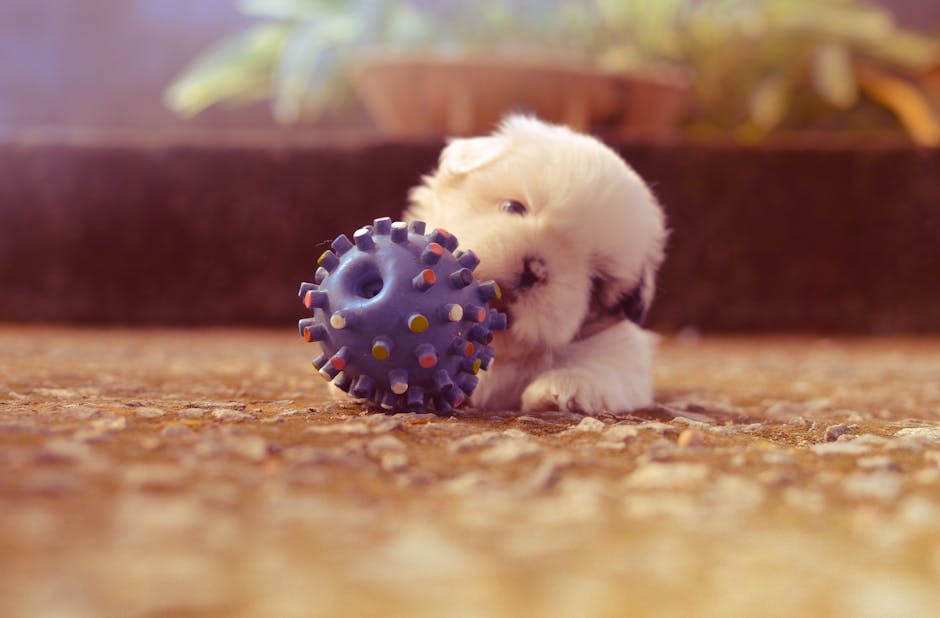
Ball toys (appropriately sized):
- Choose balls that are too large to fit entirely in your puppy's mouth
- Avoid small bouncy balls (choking hazard)
- Tennis balls are okay for supervised play but aren't chew-proof (puppies tear them apart)
- Remove immediately if the ball begins breaking apart
Puppy-specific teething rings:
- Designed specifically for puppies with erupting teeth
- Often have bumpy textures that feel good on teething gums
- Cold teething rings refrigerated (not frozen) can soothe sore gums
- Supervise to ensure your puppy doesn't chew pieces off
Nylabone (puppy-specific designs):
- Designed for puppies with softer composition than adult versions
- Chosen by size to match puppy mouth
- Supervise use and discard if pieces begin breaking off
- Some puppies tolerate them better than others
Toys to Absolutely Avoid
Small objects or toys:
- Anything smaller than a ping pong ball is potentially swallowable
- Small squeakers from damaged toys
- Coins, buttons, or small household items
- Puppies will attempt to swallow these
Toys with loose parts:
- Toys with button eyes that can be chewed off
- Squeakers that can be extracted
- Bells or other attachments that detach easily
- Stuffing from plush toys (intestinal blockage risk)
Rawhide chews:
- Most vets recommend avoiding rawhide entirely for puppies
- Rawhides are choking hazards and can cause blockages
- As rawhides soften from chewing, puppies often swallow large chunks
- Exception: Some veterinarians recommend digestible rawhide alternatives under supervision
Cooked bones:
- Cooked bones splinter and cause internal injuries
- Raw bones carry salmonella and E. coli risk
- Puppies lack the judgment to gnaw safely
String, yarn, and rubber bands:
- Linear foreign bodies (string, yarn, rubber) can wrap around intestines
- Never give puppies access to these items unsupervised
- Intestinal blockage from swallowed string requires surgery
Plastic toys or parts:
- Puppies chew plastic and swallow pieces
- Plastic blockages often require surgical removal
- Many plastic toys are not food-safe if ingested
Tennis balls (unsupervised):
- While occasional supervised play is okay, puppies shred them
- Swallowed tennis ball pieces can cause blockages
- The fuzz can be a choking hazard
Anything with toxic materials:
- Avoid toys with lead paint or toxic plastics
- Purchase from reputable manufacturers
- Research materials before offering toys
You Might Also Enjoy
- The Best Puzzle Toys for Dogs Who Get Bored Easily
- Enrichment Toys for Senior Dogs: Keeping Older Minds Sharp
- Are Squeaky Toys Safe for Dogs? What Every Owner Should Know
- The Best Chew Toys for Aggressive Chewers
Age-Appropriate Toy Selection
8-12 weeks (very young puppies):
- Soft rubber toys (Kongs in puppy size)
- Puppy-specific rope toys (three-knot style)
- Teething rings
- Avoid anything hard or with loose parts
- Heavily supervise all play
3-6 months (teething phase, rapid growth):
- Increase toy variety as teeth erupt and puppy grows
- Cold teething rings for sore gums
- Slightly larger rubber toys as puppy grows
- Supervise rope toy use closely
- Remove toys as puppy grows out of them
6+ months (approaching adolescence):
- Begin introducing more durable toys as adult teeth erupt
- Gradually transition to adult-sized toys
- Puppy-specific Nylabone (moving toward adult versions)
- Supervised rope toy use
- Appropriate tennis ball play (with close supervision)
As your puppy grows, continuously reassess toy safety. A toy perfect for an 15-pound puppy becomes a choking hazard when the puppy reaches 40 pounds.
Supervision Guidelines
Always supervise when:
- Introducing new toys
- Playing with rope toys or toys with small parts
- Using toys with stuffing (to prevent stuffing consumption)
- Playing with anything that could be a choking hazard
Safe unsupervised toys:
- Large durable rubber toys (Kongs, nylon bones) appropriately sized for your puppy
- Properly sized balls (too large to swallow)
- Sturdy toys confirmed to be indestructible for your individual puppy
Never leave unsupervised:
- Toys with small parts or attachments
- Rawhides or chew items
- Rope toys
- Balls or toys that can be torn apart
- Anything your puppy hasn't proven safe with
Signs of Toy-Related Problems
If your puppy shows these signs, remove all toys and contact your vet:
- Vomiting or retching
- Loss of appetite
- Lethargy
- Abdominal pain (hunched posture, whining)
- Diarrhea
- Constipation
- String or toy material visible in feces
- Inability to pass stool
Intestinal blockage from swallowed toy pieces is a surgical emergency. Early recognition prevents life-threatening complications.
Building Healthy Toy Habits
Rotate toys: Prevent boredom and toy obsession by rotating available toys. Store unused toys and introduce them periodically.
Teach "drop it": Train your puppy to release toys on command. This allows you to remove dangerous items quickly.
Redirect chewing: When your puppy chews inappropriate items, redirect to appropriate toys and praise heavily.
Model appropriate play: Engage your puppy with toys in ways that encourage safe behavior (not tug-of-war with small toys, not chase with thrashing toys).
Understand play preferences: Different puppies prefer different textures and play styles. Observe what your puppy enjoys safely.
The Bottom Line
Toy safety for puppies requires active selection, close supervision, and willingness to remove toys that pose hazards. No toy is universally safe—safety depends on your individual puppy's size, chewing behavior, and impulse control.
Invest in toys from reputable manufacturers designed specifically for puppies. Supervise play closely during these critical early months. Remove toys showing wear and tear. And accept that the safest toy for your puppy might be an adult-appropriate toy—size matters more than marketing claims.
Your vigilance during puppyhood prevents emergencies and teaches your growing dog healthy play habits that last a lifetime.
For more information about puppy safety, consult the American Veterinary Medical Association or your veterinarian.
Sarah Mitchell is a puppy development specialist based in Portland, Oregon, focused on safe socialization and developmental care.