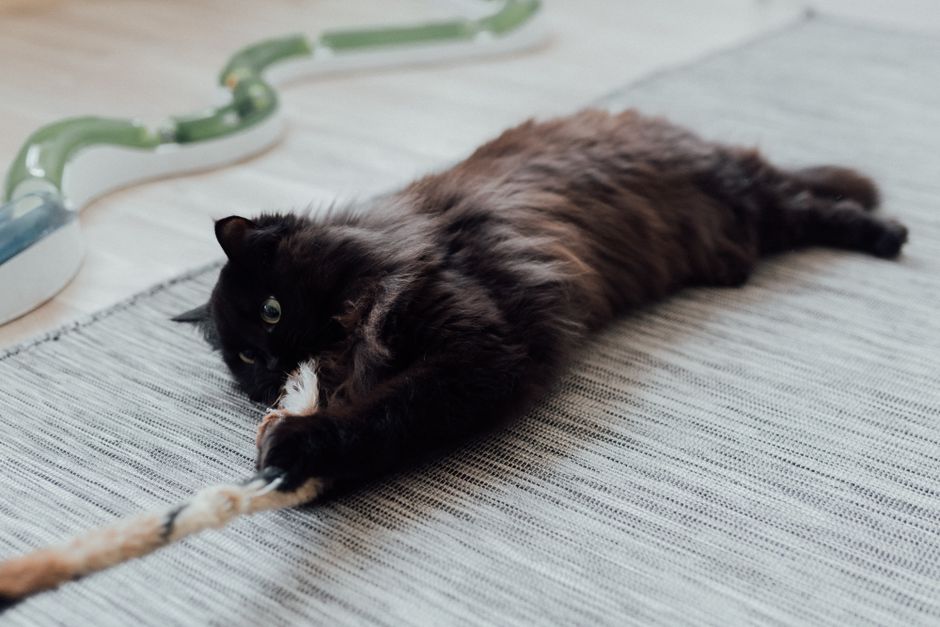
Cats lounge so naturally that we often assume they're content with minimal stimulation. But a cat that lies motionless all day isn't actually relaxing—that cat is frequently bored, under-stimulated, and at risk for obesity, behavioral problems, and depression. Play isn't optional enrichment for cats; it's foundational to their physical and mental health.
The problem is that domestic cats have fewer environmental stimuli than their ancestors did. They're not hunting, exploring large territories, or engaging in complex social interactions. If we don't provide appropriate play and enrichment, we're asking cats to survive in what essentially amounts to sensory deprivation.
Why Play Matters for Cats
Physical health: Indoor cats typically move far less than they're biologically designed to. Cats are obligate carnivores who evolved as hunters—animals of explosive short bursts of activity. Without play, cats become sedentary, leading to obesity, poor muscle tone, and metabolic issues.
Studies show that overweight cats have higher rates of diabetes, arthritis, and shortened lifespans. Regular play helps cats maintain healthy weight and muscle mass, particularly important for aging cats where maintaining muscle prevents frailty.
Mental stimulation: Cats are problem-solvers and hunters. Their brains are wired to stalk, catch, and kill prey. When this drive has no outlet, cats often express the energy through destructive behavior: scratching furniture, knocking things off shelves, excessive vocalization, or aggression.
Interactive play engages the same neural pathways as hunting, providing cognitive stimulation that reduces stress and prevents behavior problems.
Emotional regulation: Play reduces stress and anxiety in cats. Stressed cats show elevated cortisol, increased illness susceptibility, and behavioral problems. Play is one of the few activities that genuinely seem to bring cats joy and relaxation.
How Much Play Does Your Cat Need?
The amount of play varies by age and personality:
Kittens (0-1 year): Very high energy, need 20-40+ minutes of active play daily, often in multiple short sessions. They're developing coordination and practicing hunting behaviors.
Adult cats (1-7 years): Moderate to high energy depending on individual personality. Most benefit from 15-30 minutes of interactive play daily, can be split into 2-3 sessions.
Senior cats (7+ years): Reduced energy overall, but continue to benefit from 5-15 minutes of gentler play daily. Shorter, lower-intensity sessions prevent exhaustion while maintaining muscle tone.
Individual personality matters enormously. Some cats are naturally highly playful; others are more reserved. Your goal is to engage your individual cat at the level they'll tolerate.
Types of Play and Toys
Interactive play (requires owner participation):
This is the highest-value enrichment. Using a wand toy, string, or feather toy, you mimic prey movement while your cat stalks and pounces. This engages the full hunting sequence and provides aerobic exercise.
Best practices:
- Use toys with unpredictable movement (not just straight lines)
- Vary speed—sometimes fast bursts, sometimes slow creeping movements
- Let your cat "catch" and kill the toy occasionally (very important psychologically—cats need the satisfaction of a successful hunt)
- Keep sessions short for senior cats; longer for young, athletic cats
- Rotate toys to maintain interest
Autonomous play toys (cat plays independently):
Cats with high self-play drive may enjoy:
- Balls (some cats fetch and return; many just bat them)
- Crinkle toys
- Tunnels
- Puzzle feeders (combine feeding with play)
- Laser pointers (controversial—see below)
The advantage is your cat can play independently. The disadvantage is that many cats lose interest quickly if toys aren't rotated and refreshed.
Environmental enrichment (no specific toy):
- Window perches for bird-watching
- Cardboard boxes (inexpensive and cats love them)
- Paper bags
- High shelves for climbing
- Scratching posts and pads
These don't require active play but provide mental stimulation and environmental enrichment.
You Might Also Enjoy
- Cat Wand Toys: How to Use Them for Maximum Exercise and Bonding
- Interactive Cat Toys That Actually Keep Felines Entertained
- The Best Chew Toys for Aggressive Chewers
- The Best Puzzle Toys for Dogs Who Get Bored Easily
The Laser Pointer Debate
Laser pointers are contentious in cat behavior circles. Some cats enjoy them; others find them frustrating.
Potential problems:
- Cats never "catch" the laser, so they don't get the satisfaction of a successful hunt
- Some cats develop obsessive behavior, constantly hunting for the red dot in other contexts
- The unpredictable disappearance can frustrate cats
When they work:
- For very low-motivation cats that won't engage with other toys
- Combined with a physical toy at the end (touch a physical toy when the laser ends so the cat has something to "catch")
- Brief sessions (2-3 minutes)
If you use a laser pointer, end the play session by projecting the laser onto a physical toy, allowing your cat to pounce and "catch" something tangible.
Toys to Avoid
Unsafe toys:
- Small items easily swallowed (choking hazard)
- String/ribbon without supervision (can cause intestinal blockage)
- Yarn balls left unsupervised
- Broken toys with exposed filling
- Toys with small bells that can detach
Toys with limited appeal:
- Toys that are too large for your cat to bat and manipulate
- Toys without interesting motion (just a boring ball)
- Toys that hurt to touch (rough materials, sharp edges)
Increasing Play When Your Cat Isn't Interested
Some cats genuinely don't care about toys. This doesn't mean they're lazy; it means you haven't found their trigger yet.
Try different toys:
- Some cats prefer feathered toys
- Others like balls
- Still others respond only to real prey simulation (toy mice)
Consider play style:
- Some cats want fast, aggressive play
- Others want slow, creeping stalk-and-pounce
- Adjust your play style to your cat's preference
Use treats or catnip:
- Some cats engage better with toys when catnip is involved (though not all cats respond to catnip)
- Food rewards can increase toy interaction
- Puzzle feeders combine feeding motivation with play
Play when your cat naturally wants to move:
- Cats have natural activity cycles (often dawn and dusk)
- Playing during these natural windows finds cats more willing to engage
Accept limitations:
- Some cats genuinely prefer lounging to playing
- As long as your cat maintains healthy weight and shows no stress-related behaviors, that's acceptable
- Focus on other enrichment (window perches, boxes, varied environments)
Signs Your Cat Needs More Play
- Excessive weight gain despite normal feeding
- Destructive behavior (scratching furniture excessively, knocking things over)
- Overgrooming or hairballs from stress-related behaviors
- Excessive vocalization or attention-seeking
- Aggression or excessive pouncing on hands/feet
- Lethargy and depression-like symptoms
Any of these might indicate insufficient stimulation and play.
The Play-Health Connection
Play is genuinely medicine for cats. Regular interactive play maintains healthy weight, reduces stress, prevents behavior problems, and appears to increase lifespan in cats that receive consistent enrichment.
The investment of 15-30 minutes daily of interactive play returns enormous dividends in your cat's physical health, behavior, and emotional wellbeing. It's one of the highest-impact things you can do for a cat's quality of life.
Start small—even 5 minutes of interactive play daily makes a measurable difference. Gradually increase duration as your cat becomes more engaged. Your cat will become more active, healthier, and likely more affectionate as play becomes a regular part of your relationship.
For more information about cat enrichment and behavior, consult the ASPCA or talk with your veterinarian about increasing play and enrichment for your specific cat.
Sarah Mitchell is a feline behavior specialist based in Portland, Oregon, with expertise in cat enrichment and mental health.